
Table of Contents
Explore Blogs
Trending on Ebook
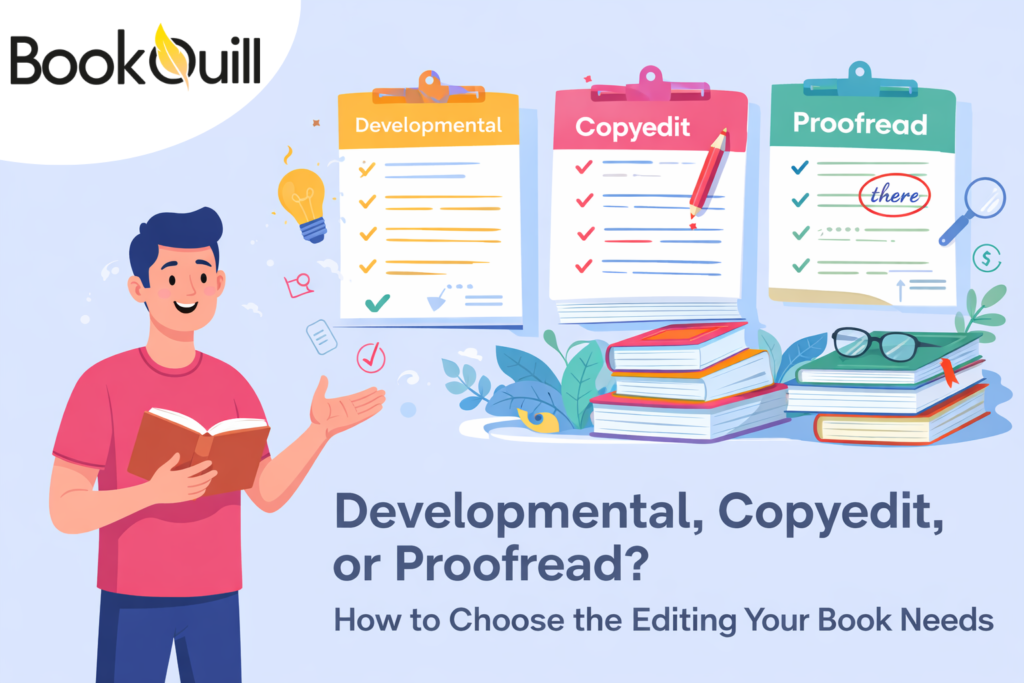
Developmental, Copyedit, or Proofread? How to Choose the Editing Your Book Needs
 Micheal Adams
Finishing a manuscript feels like crossing a finish line, but for most authors, it raises a new question almost immediately: What kind of editing does this book actually need?
Many writers assume that editing is a single step, when in reality, professional book editing occurs in stages, each serving a distinctly different purpose. Choosing the wrong one can lead to wasted time, unnecessary cost, or a book that still feels unfinished.
This guide breaks down the three main types of editing, explains how they fit into the publishing process, and helps you identify what your book needs at this stage.
Key Takeaways
- Each type of editing focuses on a different category of problems, from structure to language to final accuracy.
- The right editing choice depends on the manuscript’s condition.
- Skipping a book editing stage often creates bigger problems later. What is ignored early usually becomes more complex and more expensive to fix.
- Most professionally published books go through more than one edit. This is standard practice, not a sign of weak writing.
- Good editing protects the author’s voice while improving clarity. The goal is not to rewrite your book, but to make it readable and consistent for your audience.
How Book Editing Is Structured in Professional Publishing
Before talking about individual editing types, let’s first understand how editing works in professional publishing as a system.
Editing is not meant to correct everything at once. Instead, it is divided into stages so each round focuses on a specific layer of the manuscript. This approach reduces errors, improves clarity, and avoids conflicting changes.
3 Types of Editing That Shape a Finished Book
1. Developmental Editing
It focuses on the foundation of the book. At this stage, the concern is not how sentences sound, but whether the book works as a complete piece. Among the different types of editing, this one has the broadest scope, as every subsequent decision depends on it.
Problems That Developmental Editing Solves
This type of editing addresses issues that affect the reader’s understanding and engagement. These problems often seem vague to authors, but they become clear to readers.
Some common issues include:
- An unclear main idea or theme.
- Chapters that feel out of order.
- Sections that repeat the same point.
- A slow or uneven pace.
- Missing explanations or context.
For nonfiction, this often means the argument does not build logically from chapter to chapter. For fiction and memoirs, it may mean the emotional arc does not feel complete. These are not problems grammar tools or proofreading can fix.

How Developmental Editors Work with the Manuscript
Developmental book editing does not involve rewriting the book line by line. Instead, they analyze the manuscript as a whole and provide strategic feedback. At BookQuill, this usually involves a detailed editorial report rather than tracked sentence edits.
The process typically includes:
- Evaluating the overall structure.
- Reviewing chapter purpose and order.
- Identifying gaps or unnecessary sections.
- Commenting on pacing and balance.
- Offering revision guidance for the author.
This feedback gives authors a clear roadmap for revisions. The author remains in control of the content, but now has professional direction instead of guesswork.
Manuscript Situations That Signal a Need for Developmental Book Editing
Not every manuscript needs developmental editing, but many do, especially early drafts. Certain situations strongly suggest this stage is necessary before anything else.
These include:
- First-time authors are unsure if the book “works”.
- Memoirs with powerful stories but unclear structure.
- Nonfiction books covering complex or technical ideas.
- Manuscripts created through dictation or ghostwriting.
- Books that received mixed or confused beta reader feedback.
In these cases, starting with copyediting or proofreading often leads to frustration, because the real issues remain untouched. Developmental editing ensures the book has a solid framework before moving forward.
2. Copyediting
Once the structure of a book is solid, the focus shifts to how the writing reads on a line-by-line level. This is where copyediting comes in. At this stage, the book already knows what it wants to say. Copyediting ensures that the manuscript editing process refines clarity, flow, and consistency throughout the text.
What Copyediting Examines at the Line Level
Copyediting examines the language itself closely. The goal is not to change ideas, but to remove distractions that interrupt the reader.
Before getting into specifics, let’s clarify that copyediting works within the existing structure. It assumes chapters are in place and content decisions are already final.
A professional copyedit typically focuses on:
- Grammar, spelling, and punctuation accuracy
- Sentence clarity and flow
- Word choice and repetition
- Consistency in tone and tense
- Uniform use of names, terms, and style preferences
This is the stage where awkward sentences are smoothed out, unclear phrasing is clarified, and small inconsistencies are corrected so the writing feels intentional rather than uneven.
How Copyediting Improves Reader Experience
Readers may not consciously notice good copyediting, but they always feel the difference. When language issues pile up, they slow the reader down and reduce trust in the content. Clean writing keeps attention on the message instead of the mechanics.
Copyediting improves the reading experience by:
- Reducing mental effort while reading.
- Making arguments easier to follow.
- Creating a steady, professional tone.
- Preventing confusion caused by inconsistent terms or phrasing.
At BookQuill, we approach copyediting with the reader in mind. The aim is not perfection for its own sake, but clarity that supports the author’s intent and keeps readers engaged.
When a Manuscript Is Ready for Copyediting
Timing matters with copyediting. Doing it too early often leads to wasted effort, especially if large sections are later rewritten or removed.
A manuscript is usually ready for copyediting when:
- The structure has already been reviewed or finalized.
- Major revisions are complete.
- The author is confident in the overall direction
- Feedback no longer focuses on “big picture” issues
At this point, the editor can focus fully on language without worrying that later revisions will undo changes, making the most of affordable book editing services.
3. Proofreading: Catching Final Errors Before Publication
Proofreading is the final quality check before a book is released into the world. It is not about improvement or refinement. It is about accuracy. By the time a manuscript reaches this stage, everything else should already be settled.
Errors That Proofreading Catch
Proofreading targets small mistakes that can slip in even after careful book editing.
A proofreading pass usually looks for:
- Typos and missing words
- Incorrect punctuation
- Spacing and alignment issues
- Minor formatting inconsistencies
This stage assumes the content and wording are final. The proofreader’s job is to make sure nothing obvious undermines the finished book.
Why Proofreading Happens After Formatting
Many authors are surprised to learn that proofreading comes after formatting, not before. This order exists because formatting itself can introduce new errors.
Page breaks, font changes, and layout adjustments can cause:
- Words to be dropped or duplicated.
- Spacing problems.
- Inconsistent headers or page numbers.
Proofreading the formatted version ensures the book is clean in its final form, as readers will see it, whether in print or digital format.
Limits of Proofreading as a Book Editing Method
Proofreading is often misunderstood as a catch-all solution. In reality, it has strict limits.
Proofreading does not:
- Improve sentence clarity.
- Fix confusing arguments.
- Address weak structure.
- Correct repetitive writing.
Using proofreading to fix problems meant for earlier stages usually leads to disappointment. It works best when all other elements are already in place.
How Do You Know Which Editing Is Best for Your Book’s Needs?
Choosing the right editing service begins with understanding the specific issues your manuscript presents. This is especially important when evaluating different affordable book editing companies, as not all services solve the same problems.
Assessing Your Draft Based on Its Current Problems
Instead of thinking in terms of editing labels, it helps to look at symptoms. Different problems point to different solutions:
Ask yourself:
- Are readers confused about the message or flow?
- Do chapters feel out of balance or repetitive?
- Does the writing feel rough or inconsistent?
- Are mistakes small and mostly mechanical?
Your answers reveal which level of editing will actually help.
Matching Manuscript Symptoms to the Correct Editing Stage
Once problems are identified, matching them to the right editing stage becomes clearer.
Here is how issues typically align:
- Confusion, pacing issues, or unclear direction → developmental editing
- Awkward sentences or inconsistent tone → copyediting
- Small surface errors only → proofreading
This approach prevents paying for the wrong service and getting results that feel incomplete.

Do You Need More Than One Type of Editing?
Many authors assume they must choose one editing service and move on. In reality, most books that meet professional standards undergo more than one stage of editing by affordable professional editing services.
Why One Editing Pass Is Rarely Enough
Each editing stage focuses on a different category of issues. When only one pass is used, some problems remain simply because they fall outside that editor’s scope.
Here is why multiple stages are common:
- Structural issues must be resolved before language can be refined.
- Clean language still needs final accuracy checks.
- New issues often appear after revisions.
Trying to combine all of this into a single step usually leads to overlooked problems or conflicting changes.
The Typical Editing Sequence for a Professional Book
While every project is different, most professionally produced books follow a similar sequence.
A standard editing flow looks like this:
- Developmental feedback
- Author revisions
- Copyediting
- Formatting
- Proofreading
At BookQuill, we have the best book editors, who go through this process based on the manuscript’s current standing, rather than making assumptions.
Situations Where Editing Stages Can Be Adjusted
Not every book requires every stage to be completed in full. Some manuscripts are cleaner or more focused than others.
Adjustments may make sense when:
- The manuscript is a short, tightly written project.
- The author has already worked with professional editors before.
- The book is a revised edition rather than a first release.
4 Common Editing Myths
Book editing myths often cause authors to delay or avoid the help their book actually needs. Clearing these up makes decision-making much easier.
Myth 1: “Proofreading Is the Same as Editing”
Proofreading only checks for small errors. It does not improve clarity, structure, or flow. Treating it as full editing leaves major issues untouched.
Myth 2: “Editing Removes the Author’s Voice”
Professional editors do not rewrite books to sound like their own work. The goal is to make the author’s voice clearer and more consistent, not different.
Myth 3: “Software Can Replace Human Editors”
Automated tools can flag basic mistakes, but they cannot understand meaning, tone, or context. They also miss structural and logical problems entirely.
Myth 4: “Editing Is Only for Traditional Publishing”
Self-published books are held to the exact reader expectations. Editing affects reviews, credibility, and reader trust, regardless of publishing path.
Conclusion
Choosing the right type of book editing is less about labels and more about understanding your manuscript’s current needs. A book with structural gaps requires a different approach than one with rough language or small mistakes. When editing is done in the right order, the process becomes smoother, more efficient, and far less stressful.
At BookQuill, we work with authors at every stage, helping them move forward with clarity instead of guesswork. If you are unsure which editing step to begin with, a professional review from our experienced editors can be helpful. We guide you before you invest time and resources, and offer affordable writing editing services.
FAQs
Is editing necessary for self-published books?
Yes. Readers expect the same level of quality regardless of how a book is published. Book editing helps prevent confusion, improves credibility, and reduces negative reviews caused by avoidable mistakes.
What is the difference between copyediting and proofreading?
Copyediting improves sentence clarity, consistency, and readability throughout the manuscript. Proofreading occurs later and focuses solely on identifying minor errors, such as typos or spacing issues, in the final version. They serve different purposes and are not interchangeable.
Can editing help improve book reviews?
Strong editing improves clarity and readability, which directly affects how readers experience the book. Many negative reviews mention confusion or errors that proper editing could have prevented.
How much editing does a first-time author usually need?
First-time authors often benefit from developmental editing, followed by different types of editing, including copyediting and proofreading. This ensures the book works as a complete piece before polishing the language and final details.
When should I start looking for an editor?
Editing should be considered once the manuscript draft is complete. Starting with a professional assessment helps determine the right editing stage before any major investment.
(Note: Some of the links in this post are affiliate links. This means if you click on them and make a purchase, we may earn a small commission at no extra cost to you. We only recommend products and services we genuinely trust and believe will be useful to our readers. Your support helps us continue creating honest, helpful guides like this one. Thank you!)
About Author
Hi My name is Micheal Adams, When I am not watching horror movies and helping my kids with homework or reading my favorite fantasy/supernatural novels – I’m writing to guide aspiring authors. I focus on exploring and simplifying both the technical aspects and the often-overlooked details of book writing and publishing so I can empower new writers to climb the Amazon bestseller list and connect with more readers.