

Table of Contents
Explore Blogs
Trending on Ebook
The Future of Audiobooks – Interactive, AI Narration, and Trends to Watch in 2026
 Micheal Adams
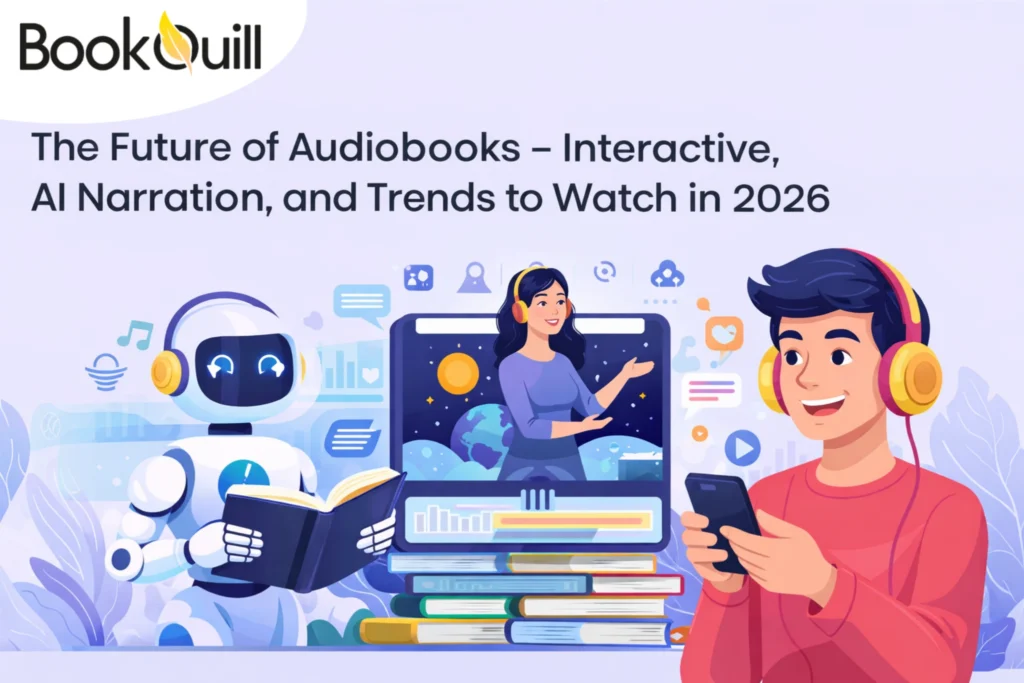
The future of audiobook publishing is no longer a distant concept. It is unfolding rapidly in front of us. Audiobooks have transformed from simple narrated versions of printed books into immersive, tech-driven experiences that blend storytelling, artificial intelligence, personalization, and interactivity.
As we move toward, the audiobook industry is entering a defining era shaped by changing consumer habits, advanced AI narration, and innovative production models. Let’s explore how the audiobook industry is evolving, what trends will dominate the audiobooks market, and how authors, publishers, and listeners can prepare for what’s next.
Key Takeaways
- Audiobooks Are Becoming Experiential – The future of publishing audiobooks is moving beyond passive listening. Interactive features, immersive sound design, and listener-driven story paths are redefining engagement. Soon, the audiobook industry will provide a more dynamic experience than traditional readings, increasing retention, emotional connection, and long-term listener loyalty across the audiobook industry.
- AI Narration Is Reshaping Cost and Speed – AI narration is dramatically reducing production timelines and expenses, making audiobook creation accessible to more authors. While human narrators remain essential for premium titles, AI-driven workflows allow for scaling faster, expanding catalogs, and competing effectively in a rapidly growing audiobooks market.
- Personalization Will Define Listener Expectations – Custom audiobook creation services are setting new standards by offering personalized voices, pacing, and accents. This shift aligns with consumer demand for tailored experiences. As personalization becomes mainstream, audiobook platforms and professional audiobook services that prioritize customization will gain a stronger audiobook market share.
- Global Expansion of Audiobook – With multilingual AI narration and simplified distribution, the audiobook market size will grow significantly across non-English regions. Localization at scale will help publishers reach global audiences, making international markets a major growth driver for the audiobook industry through this year and beyond.
- Indie Authors Have More Opportunities Than Ever – Lower production barriers and affordable audiobook services empower indie authors to enter the audio space without large budgets. Combined with direct-to-consumer platforms, these tools allow independent creators to compete with established publishers and build sustainable revenue streams in the audiobook industry.
- Technology and Creativity Must Evolve Together – The best audiobook creation services will balance AI efficiency with human creativity. Success will depend on blending technology, ethical practices, and storytelling quality. This ensures innovation enhances, rather than replaces, the emotional power that defines great audiobooks.
From Cassette Tapes to Intelligent Experiences
Audiobooks began as niche products recorded on vinyl and cassette tapes, primarily serving visually impaired audiences. With the rise of CDs, MP3s, smartphones, and streaming platforms, audiobooks have become a mainstream content format enjoyed by millions worldwide.
Today, audiobooks are no longer limited to traditional narration. They now include:
Multi-cast Voice Performances
Multi-cast voice performances bring stories to life by assigning different voice actors to individual characters, similar to radio dramas. This approach enhances emotional depth, clarity, and realism, especially in fiction and fantasy genres. In the future, multi-cast productions will attract listeners seeking cinematic, high-engagement storytelling experiences.
AI-generated Narration
AI-generated narration uses advanced voice technology to convert text into natural-sounding speech with consistent tone and pacing. It significantly reduces production time and costs, making audiobook creation accessible to more authors.
In the industry, AI narration supports scalable content production while maintaining quality for non-fiction and educational audiobooks. Writers often hire the best audiobook services to get a professional audiobook.
Soundscapes and Immersive Audio
Soundscapes and immersive audio add background music, ambient sounds, and effects that enhance the listener’s emotional experience. These elements help set the mood, build tension, and deepen immersion without overpowering narration. As the audiobook market grows, immersive audio will become a standard feature for premium and interactive audiobook experiences.
Interactive Storytelling Features
Interactive storytelling features allow listeners to influence narratives through choices, branching paths, or bonus content. This transforms audiobooks from passive listening into participatory experiences. In the Future of Audiobook publishing, interactivity will increase engagement, replay value, and appeal, especially among younger and tech-savvy audiences.
The Expanding Audiobooks Market
The audiobooks market has experienced explosive growth over the past decade. Increased smartphone adoption, busy lifestyles, and a preference for audio content have driven demand across all age groups.
Audiobook Market Size and Growth Projections
The growth was $2.22 billion in 2024, which was 13% more if it’s compared to the previous year. The global audiobook market size continues to grow at a steady compound annual growth rate (CAGR). Industry analysts project that by the end of this year, the audiobook industry will be worth tens of billions of dollars, fueled by:
Subscription-Based Platforms
Subscription-based platforms have become one of the strongest growth drivers of the audiobook industry. Monthly plans encourage consistent listening habits while giving users access to massive content libraries at a fixed cost.
This model increases listener retention, predictable revenue for publishers, and long-term market stability. As more platforms expand globally, subscriptions continue to push the market upward and strengthen the overall market share.
Smart Speakers and In-Car Entertainment
The rise of smart speakers and connected vehicles has significantly boosted audiobook consumption. Voice-enabled devices make it effortless for users to start, pause, and resume audiobooks hands-free.
In-car infotainment systems now integrate audiobook apps seamlessly, turning commute time into listening time. This convenience fuels daily usage, expanding the audiobook market and reinforcing long-term industry growth.
Increased Global Language Offerings
Global language expansion is opening up massive new audiences for audiobooks. AI-powered translation and narration tools allow publishers to produce multilingual versions faster and more affordably than ever before.
As audiobooks reach non-English markets, international adoption grows rapidly. This globalization increases audiobook downloads worldwide and positions the industry for sustained expansion through 2026.
AI-Driven Cost Efficiencies
AI-driven production efficiencies are transforming how audiobooks are created and distributed. Automation reduces narration, editing, and post-production costs, making audiobook creation accessible to more authors and publishers.
Lower barriers to entry lead to more titles, diverse genres, and competitive pricing. These efficiencies directly support audiobook market size growth and accelerate innovation across the industry.
What does it reflect?
The rapid growth of the audiobook industry reflects a major shift in how audiences consume content. Listeners increasingly prefer audiobooks over traditional print and ebooks because they fit seamlessly into busy, multitasking lifestyles.
This rising audiobook market share highlights demand for convenience, accessibility, and immersive storytelling. It also shows how technology such as smartphones, smart speakers, and AI narration has made audio content more engaging and widely available, which reshapes reading habits across all age groups.
Why Audiobooks Are Dominating Content Consumption
Let’s just start by understanding that audiobooks are a big deal. Do you know why we say this? It is because in the United States, 51% of adults (about 134 million people) have listened to an audiobook, and 38% of non-listeners report interest in audiobooks, showing rising interest across audiences.
This happened because of several lifestyle shifts, which made people switch to audiobooks instead of reading:
Multitasking
Audiobooks fit seamlessly into modern, fast-paced lifestyles where time is limited and multitasking is common. People can enjoy books while driving, commuting, exercising, cooking, or working on routine tasks.
This hands-free and eyes-free experience allows listeners to consume content without interrupting daily responsibilities. As schedules grow busier, this convenience continues to push audiobooks ahead of traditional reading formats.
Improved Accessibility
Audiobooks offer an inclusive solution for individuals with visual impairments, learning disabilities, or reading difficulties such as dyslexia. By removing the need to focus on printed text, audiobooks open the world of literature to a wider audience.
This accessibility also benefits older adults and language learners, making audiobooks a universally accessible format across different demographics.
Digital Distribution
Audiobooks are easily distributed across borders through digital platforms, allowing instant access for listeners worldwide. With no physical shipping required, authors and publishers can reach international audiences instantly.
Multilingual narration and localized content further enhance global adoption, helping the audiobook industry expand into new regions and increase its worldwide listener base.
Also, with nearly 48% access to audiobooks via smartphones, it is quite clear that digital habits and distributions fuel industry expansion.
Stronger Emotional Engagement
Voice narration adds emotion, personality, and authenticity that text alone often cannot convey. Skilled narrators bring characters and stories to life using tone, pacing, and expression. This emotional depth strengthens listener connection, improves retention, and enhances storytelling impact.
As production quality improves, emotional engagement will remain a major driver of audiobook popularity.
Interactive Audiobooks
It allows listeners to:
- Choose Story Paths – Interactive audiobooks allow listeners to select how the story unfolds, creating a personalized narrative experience. At key moments, the audiobook pauses and offers choices that lead to different plotlines or endings. For example, in a mystery audiobook, the listener might choose whether the main character follows a suspect or investigates a hidden clue, resulting in unique story outcomes each time.
- Influence Character Decisions – Listeners can directly affect character behavior and development through decision-based prompts. Instead of passively listening, they help shape personalities, relationships, and moral choices. For example, in a fantasy audiobook, the listener may decide whether the hero trusts a stranger or challenges them, altering alliances, character arcs, and the overall emotional direction of the story.
- Showing Bonus Content – Interactive audiobooks can unlock exclusive bonus content based on listener actions or progress. This may include behind-the-scenes narration, author commentary, alternate scenes, or deeper character backstories. For example, completing a full listening path might unlock an extra chapter where the author explains why certain plot twists were created, enriching the overall audiobook experience.
- Participate in Quizzes or Polls – Quizzes and polls keep listeners engaged by testing knowledge or gathering opinions during the audiobook. These interactions reinforce learning and emotional involvement. For example, in a self-help audiobook, listeners might answer a quick poll about their habits, then receive personalized advice based on their response, making the audiobook more interactive and impactful.
This format borrows concepts from gaming and interactive cinema, turning passive listeners into active participants. If you can’t do it, you can hire affordable audiobook services.
What Does It Increase?
- Listener engagement
- Completion rates
- Emotional investment
Interactive storytelling is expected to play a huge role in children’s audiobooks, self-help, education, and fiction genres.
Redefine Audio Production AI Narration
AI narration is perhaps the most disruptive force in the audiobook industry today. AI narration uses advanced text-to-speech (TTS) models trained on human voices. These models can:
1. Replicate Tone, Pacing, and Emotion
Modern AI narration systems are designed to understand emotional cues within text. They can adjust vocal tone, pauses, and intensity to match the mood of a scene, whether it’s suspenseful, instructional, or conversational.
This emotional awareness helps maintain listener engagement and ensures the audiobook feels expressive rather than robotic, making AI narration suitable for many non-fiction and select fiction projects.
2. Adapt Pronunciation and Accents
AI narration technology can intelligently adjust pronunciation based on context, language rules, and regional preferences. It supports multiple accents and dialects, making it ideal for global audiobook distribution.
This adaptability helps authors reach international audiences without recording multiple versions, improving accessibility and expanding market reach within the growing audiobook industry.
3. Adjust Delivery Style Based on Genre
Different genres demand different narration styles, and AI excels at adapting accordingly. Whether it’s a calm, authoritative tone for business books or an energetic delivery for self-help content, AI narration can be fine-tuned to match genre expectations.
This flexibility ensures a more authentic listening experience while maintaining efficiency and cost-effectiveness.
Human Narrators vs. AI Narration
While human narrators remain essential for premium productions, AI narration is being increasingly accepted for:
- Non-fiction books
- Educational content
- Technical manuals
- Short-form audiobooks
This year, the best audiobook creation services will create hybrid models while combining them with human oversight and AI narration. This is surely going to dominate the industry.
Ethical and Legal Considerations of AI Audiobooks
The rise of AI narration raises important questions:
- Who owns the voice data?
- How are voice actors compensated?
- Can AI replace human creativity?
Regulations and ethical standards are expected to mature by 2026, ensuring transparency and fair usage across the audiobook industry.
Customization and Personalization in Audiobooks
Personalized audio experiences are redefining listener expectations.
Custom Audiobook Creation
Custom audiobook creation services allow authors and publishers to tailor:
Voice Type and Accent
They give authors the freedom to choose voice types and accents that best match their story, genre, and target audience. A warm, conversational voice may suit self-help content, while a dramatic or authoritative tone works better for fiction or business books.
Accent selection also helps localize audiobooks for regional markets, increasing authenticity, listener comfort, and global appeal.
Listening Speed
Listening speed customization allows audiences to control how fast or slow a narration plays without losing clarity. Some listeners prefer a relaxed pace for storytelling, while others want faster playback for learning or productivity.
By offering adjustable narration speed during custom audiobook creation, publishers enhance accessibility, accommodate diverse listening habits, and significantly improve the overall user experience.
Background Music
Background music adds depth and atmosphere to audiobooks when used thoughtfully. Custom audiobook creation services can incorporate subtle music or soundscapes that enhance emotions without overpowering narration.
Whether it’s light instrumental tones for nonfiction or cinematic effects for fiction, well-balanced audio design increases immersion, keeps listeners engaged, and elevates perceived production quality.
Emotional Intensity
Emotional intensity control allows creators to fine-tune how expressive the narration feels. Some stories require calm, steady delivery, while others demand dramatic pauses and heightened emotion.
Custom audiobook creators adjust tone, emphasis, and pacing to match the narrative’s mood, resulting in a more authentic listening experience that strengthens emotional connection and long-term listener loyalty.
Audiobooks and the Creator Economy
People are earning more and more from audiobooks.
New Monetization Models
1. Exclusive Platform Deals
Exclusive platform deals allow authors and publishers to release audiobooks on a single platform for a fixed period in exchange for higher royalties, upfront payments, or promotional support. This model increases visibility, reduces marketing costs, and helps creators secure predictable income while building a strong audience within the audiobook industry.
2. Subscription Revenue Sharing
Subscription revenue sharing enables creators to earn income based on listening time or engagement rather than one-time sales. As audiobooks grow on subscription platforms, this model rewards consistent content quality and long-term listener retention, making it an attractive option for authors producing multiple titles or ongoing audio content.
3. Serialized Audio Content
Serialized audio content releases audiobooks in episodes instead of full-length formats. This approach keeps listeners engaged over time, encourages repeat visits, and allows creators to test ideas before full production. Serialization also opens opportunities for sponsorships and community-driven growth within the audiobook industry.
4. Premium Interactive Experiences
Premium interactive experiences offer enhanced features such as listener choices, bonus scenes, or behind-the-scenes audio. These high-value offerings justify higher pricing and deepen engagement. By using storytelling with technology, this model helps creators stand out while generating new revenue streams in the industry.
Localization and Global Expansion
The global audiobook market is expanding rapidly into non-English regions.
Multilingual AI Narration
AI narration enables:
- Fast translation and narration
- Cost-effective localization
- Global audiobook distribution
This trend will significantly increase audiobook market share worldwide by the end of 2026.
Audiobooks in Education and Corporate Training
Beyond entertainment, audiobooks are transforming learning environments.
Educational Use Cases
- E-learning modules
- Professional certification prep
- Corporate onboarding
- Skill development
This diversification strengthens the audiobook industry’s long-term sustainability.
What’s the Role of Smart Devices in Audiobook Growth?
Smart speakers, wearables, and connected vehicles are reshaping listening habits. By the last month of 2026:
- Voice commands will control audiobook playback
- Cars will integrate audiobook platforms seamlessly
- Personalized listening recommendations will improve
These innovations directly impact the future of audiobook consumption.
Data-Driven Audiobook Experiences
Analytics and AI are enabling publishers to:
- Track listener engagement
- Optimize narration styles
- Improve story pacing
Data-driven insights will guide audiobook production decisions across the audiobooks market.
Challenges Facing the Audiobook Industry
Despite rapid growth, the audiobook industry faces challenges:
- Content saturation
- Listener fatigue
- Pricing competition
- Intellectual property protection
Addressing these challenges will be essential for sustainable growth.
Opportunities for Indie Authors
The evolving audiobook market creates unprecedented opportunities for independent authors:
- Lower entry barriers
- Affordable best audiobook services
- Direct-to-consumer platforms
By using audiobook services and AI tools, indie creators can build profitable audio catalogs.
The Audiobook Industry Is at a Turning Point
The future of audiobook content is dynamic, immersive, and technology-driven. By the end of 2026, audiobooks will no longer be simple audio versions of books as they will be interactive, personalized, and globally accessible experiences.
With rapid growth in audiobook market size, expanding audiobook market share, and innovation driven by AI narration, the audiobook industry is entering its most exciting phase yet. Whether through the best audiobook services or premium professional audiobook services, the opportunities ahead are vast.
For creators, listeners, and businesses alike, now is the time to embrace the future and listen closely to where the audiobook revolution is headed.
FAQs
How can audiobooks strengthen an author’s personal brand?
Audiobooks allow authors to build deeper emotional connections with audiences through voice and tone. Consistent audio releases help establish authority, especially in non-fiction genres. As the audiobook industry grows, authors who invest in high-quality narration and branding-friendly production will stand out more effectively across platforms.
Are audiobooks effective for lead generation and marketing?
Yes, audiobooks can be good marketing tools. Short-form audio, sample chapters, or exclusive audiobook content can attract new audiences. When paired with email funnels or social media promotion, audiobooks help authors grow communities while supporting long-term monetization strategies within the audiobooks market.
How does audiobook SEO differ from ebook or print SEO?
Audiobook SEO focuses on metadata such as narrator name, genre keywords, listening length, and platform categories. Optimized descriptions improve discoverability in audio marketplaces. As audiobook market share grows, metadata optimization will become as important as traditional SEO for authors and publishers.
Can audiobooks be bundled with other digital products?
Audiobooks are increasingly bundled with courses, memberships, and coaching programs. This approach adds perceived value and boosts conversions. As custom audiobook creation services expand, creators can design audio content specifically for bundled offers, enhancing engagement and diversifying revenue streams.
How can Kit (ConvertKit) support audiobook marketing?
Kit (ConvertKit) helps audiobook creators build targeted email campaigns, automate listener follow-ups, and deliver exclusive audio content. Authors can segment subscribers based on listening preferences and promote new audiobook releases efficiently. This makes Kit a valuable tool for scaling audiobook audiences and sales.
What role do audiobooks play in long-term content repurposing?
Audiobooks can be repurposed into podcasts, short audio clips, courses, or promotional snippets. This extends content lifespan and maximizes ROI. In the evolving future of publishing, repurposing strategies help creators stay visible while maintaining consistent engagement across multiple channels.
Disclaimer: Some links in this article may be affiliate links. This means we may earn a small commission at no extra cost to you if you choose to purchase through these links. We only recommend tools and resources that genuinely add value and align with the topic discussed.
About Author
Hi My name is Micheal Adams, When I am not watching horror movies and helping my kids with homework or reading my favorite fantasy/supernatural novels – I’m writing to guide aspiring authors. I focus on exploring and simplifying both the technical aspects and the often-overlooked details of book writing and publishing so I can empower new writers to climb the Amazon bestseller list and connect with more readers.