
Table of Contents
Explore Blogs
Trending on Ebook
Secrets of Successful Ghostwriting: How Your Voice Stays Yours When Someone Else Writes
 Micheal Adams
You’ve probably thought about writing a book, an article, or even just sharing your story online. The ideas, the passion, and the knowledge are there. But when it comes to actually putting it into words… It’s either too time-consuming or just plain overwhelming.
That’s where ghostwriting comes in.
However, before you think that your voice would be misplaced, let us assure you that it isn’t really the case.
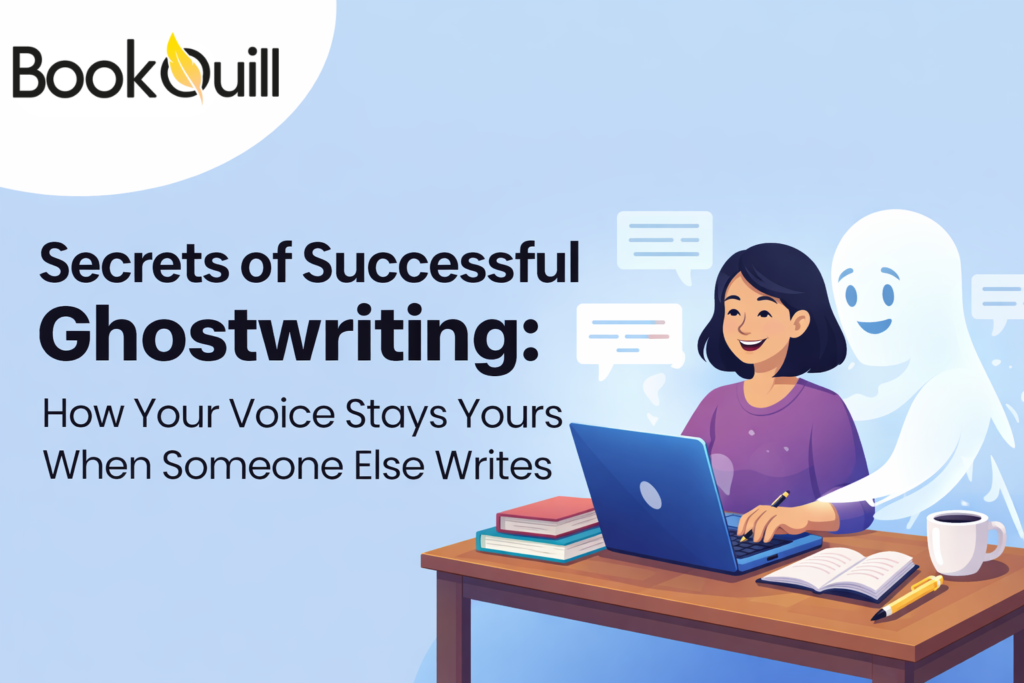
Successful ghostwriting isn’t about someone else taking over your voice. It’s about keeping you at the center of the message, while a professional helps put it into smooth, clear words that sound just like you.
In this blog, we’re going to talk about how ghostwriting actually works, how a ghostwriter keeps your voice intact, and why it’s more common (and helpful) than you might think.
Little Spoiler: You’ll see that when done right, ghostwriting doesn’t take anything away; it gives your ideas a voice.
Key Takeaways
- A professional ghostwriter begins by listening closely. This includes how you talk, the phrases you use, and the way you explain things naturally.
- From reading your past content to researching your industry and audience, they build context so your tone fits your message and your market.
- Before writing full drafts, ghostwriters create outlines to make sure the flow and ideas match what you want to say.
- They write in your tone, using your style, whether that’s sharp and direct or casual and story-driven.
- With feedback rounds built in, you get to fine-tune each draft so it sounds exactly like something you’d say.
- Final polishing is about fixing grammar, formatting, and flow, without losing your voice.
What’s Ghostwriting and Why It Matters More Than You Think
This service means someone else writes the content, but the ideas, voice, and ownership still belong to you. It’s your thoughts, your tone, and your message, just written more clearly and professionally by someone who’s good with words.

Ghostwriters help people bring their ideas to life when:
- They don’t have time to write.
- Writing isn’t their strongest skill.
- They’re too close to the subject and need an outside eye.
- They want a polished piece that still sounds like them.
Let’s say you’re a coach, a founder, or a busy professional. You’ve got years of stories, lessons, and insights in your head. You know it could help people if you turned that into a book or blog. But you don’t know where to start. Or worse, you start… and never finish.
That’s where ghostwriting services come in.
Take the example of Howard Schultz, former CEO of Starbucks. His book Onward was co-written with Joanne Gordon. His voice still shines through: it’s personal, passionate, and full of stories. But a ghostwriter helped shape it so it made sense to readers.
That’s the whole point of successful ghostwriting: it sounds like you, not them.
But Why More People Are Doing This Now
Writing used to be something you either did yourself or didn’t do at all. But now, more professionals are seeing ghostwriting as a smart way to get their ideas out—without sacrificing their voice or burning out trying to do it all solo.
The biggest shift? Ghostwriting is no longer just a “publishing shortcut.” It’s becoming part of how people build their personal brand, reach new audiences, and stay visible in a crowded space. That’s why the demand for a ghostwriter for hire is growing. With more creators, coaches, and solopreneurs writing books or online content, the market is expanding fast. In fact, the industry is growing at a 6.3% CAGR and is expected to hit $8 billion by 2030.
That growth includes a wave of new, flexible services for people who want quality without complexity.
What Does “Voice” Mean in Ghostwriting?
When we talk about someone’s “voice” in writing, we’re not talking about how they sound when they speak. Voice in ghostwriting is how someone comes across on the page. This includes personal style, attitude, and rhythm.
It’s not just what you say but how you say it. Let’s break that down:
Voice Means Your Personality on Paper
Everyone has a natural way of explaining things. Some people are funny. Some are straight to the point. Some use stories to teach, while others love short, punchy advice.
That’s why successful ghostwriting pays attention to things like:
- Your sentence length (Do you write short and snappy? Or more reflective and detailed?)
- Your tone (Casual? Professional? A mix of both?)
- The words you use often (Do you say “let’s go” or “let’s begin”?)
- The rhythm of your thoughts (Do you build up to a point or just get to it?)
That’s your writing voice.
Think of it like this: if someone read your book out loud, would it sound like you’re the one talking? If yes, that’s your voice done right.
Look at two well-known books:
- Brené Brown writes in a warm, research-backed but deeply personal tone. Her books feel like a thoughtful friend guiding you through tough topics.
- Gary Vaynerchuk, on the other hand, writes like he talks – fast, energetic, and a little in-your-face.
Both have strong voices. And when they work with editors or ghostwriters, those professionals don’t change their voice, but they help amplify it.
How Professionals Include Your True Voice with Successful Ghostwriting
Once you decide to get help with your writing, the next big question is: How do ghostwriters actually make it sound like me?
The answer is simple: it’s a process that blends structure with creativity. Professional ghostwriters don’t just type words for you. They study your tone, shape your ideas, and polish every draft until it feels like something you would have written on your best day.
Let’s break down how they do it, step by step:
1. Listening First, Always
Every strong ghostwriting project begins with listening. Before any outlines or drafts happen, the ghostwriter will sit with you (usually over a video call) and just listen. They’re trying to understand:
- What you care about.
- How you talk.
- What stories or phrases you repeat.
- What you don’t want to sound like.
This early stage is all about voice capture. Some ghostwriters will record conversations (with your permission), others take notes. Either way, they’re building a mental map of your communication style.
Here’s what they usually do:
- They hop on Zoom calls or phone interviews to hear how you naturally talk.
- They review anything you’ve already written: emails, newsletters, blog posts—even social media captions.
- They ask questions. Lots of them. About your story, your audience, your values.
Quick Tip: Casual chats work best. You don’t need to “sound smart” – sound like yourself.
2. Outline That Matches Your Writing
Once your ghostwriter has a sense of your voice, the next step is building alignment.
No one can read your mind. So, before any full drafts begin, an affordable ghost writer will often create:
- A content outline (like a chapter-by-chapter breakdown)
- A writing style note (to keep tone consistent)
- A sample paragraph or intro for you to approve
This step is not just “nice to have.” It’s essential.
Let’s say you hate exclamation marks or don’t use emojis. Or maybe you want a bold tone, not a soft one. You get to approve it before any full writing begins. That way, both of you are clear on the message and direction.
Tip: Share things you love and things you hate reading. It’s super helpful.
3. Writing in Your Voice (Not Theirs)
With your tone and outline ready, writing begins. But here’s the thing, good ghostwriters write in your voice, not their own.
They’ll choose words, sentence lengths, and phrasing that reflect how you would say something. If you’re someone who uses quick, punchy lines, they’ll keep that. If you use stories to teach, they’ll include those too.
And this part is never one-and-done. You get to review the first draft and give honest feedback, like:
- “I wouldn’t say it like that.”
- “Can we cut this down a bit?”
- “Let’s add a story here instead.”
- “Can we add a joke here? That’s how I explain this in my workshops.”
That feedback helps shape the next version. And the more collaboration you do together, the faster the ghostwriter learns to sound like you naturally.
4. Drafts, Revisions, and Fine-Tuning
Most ghostwriting services include multiple rounds of revisions. This is where things go from “pretty good” to “exactly right.”
Here’s what might happen:
- You review the draft at your own pace.
- You leave comments, voice notes, or quick thoughts (whichever works best for you).
- The writer tweaks sentences, tightens the rhythm, and adjusts any parts that feel off.
5. Final Editing and Proofreading
Once you’ve approved the structure and style, the final clean-up begins. This includes:
- Fixing any grammar slips or typos.
- Making sure the paragraphs flow naturally.
- Adjusting wordy sections that might feel too long.
- Checking that formatting stays consistent from start to finish.
Some ghostwriters work with a separate editor for this. Others handle it themselves. Either way, you won’t need to worry about things like missing commas or awkward transitions. This stage is all about smoothing out the edges so your final content reads clean, confident, and clear.
6. Tools That Keep You in Control
Ghostwriting isn’t just interviews and drafts anymore. Modern tools make collaboration easier and clearer.
Here’s what’s commonly used:
- Google Docs for real-time comments and tracked changes
- Voice note apps like Otter or WhatsApp for sending feedback quickly
- MailerLite or Notion for progress tracking, outlining, and updates
- Regular check-ins (weekly or bi-weekly) to review direction and next steps
Even book ghostwriting services use these tools to keep things smooth and transparent. You don’t have to be tech-savvy to be involved. You just need to be reachable, honest, and open to sharing how you would say things.
The Reality of Affordable Ghostwriting (Not Cheap, But Smart)
By now, you might be wondering: “All this sounds great… but is it going to break the bank?”
That’s a fair question. Many people hear the word “ghostwriter” and picture a New York Times bestselling author paying $50,000 to have their memoir written. And yes, some do, but that’s not the only path.
There’s a big difference between “cheap” ghostwriting and affordable ghostwriting services that still deliver real quality.
What Does It Really Mean?
Writing a full-length book takes time. A good ghostwriter is not just typing words. They’re researching, planning, drafting, editing, and working closely with you every step of the way. So, if someone promises to write your 200-page book for $300, that’s a red flag. It’s not possible without cutting corners (or using AI tools that won’t sound like you).
But here’s the good news: you don’t need to spend $20,000 either.
Many experienced ghostwriters (especially freelancers or ghostwriting agencies) offer flexible, affordable packages. You might pay anywhere from $3,000 to $8,000 for a solid manuscript, depending on the length, complexity, and how much content you already have.
Expect Realistic Things to Get Better Results
A common mistake people make is focusing only on price and ignoring fit. The ghostwriter’s background, voice range, and past work matter a lot more than their hourly rate.
Let’s say you’re a wellness coach. A ghostwriter who’s worked on similar books before will “get” your tone way faster. That saves time, reduces rewrites, and gets your book to the finish line faster. That’s why many professionals search specifically for professional ghostwriters for books in their niche.
Here’s what to look for:
- Do they ask about your voice?
- Can they show you past work in a similar style?
- Are they open about timelines and pricing?
- Do they offer editing and proofreading as part of the package?
These questions matter more than the number on the invoice.
In a Nutshell
This is what successful ghostwriting is all about: it keeps your voice, your energy, and your message front and center with strategic methods, while giving you the freedom to focus on what you do best.
Whether you’re a coach, founder, or creative professional, working with the right ghostwriter means you don’t have to choose between quality and authenticity. Your voice isn’t just protected; it’s the foundation of everything that’s written.
From capturing your tone to shaping your ideas and handling revisions with care, the right ghostwriting process works like a partnership. One that helps your words go further.
And yes, it’s possible to do all of this, even on a budget.
When the writing sounds like you, reads like you, and connects like you. That’s not just ghostwriting; that’s your voice, your way.
Frequently Asked Questions
Is hiring a ghostwriter ethical?
Absolutely. Ghostwriting is widely accepted in publishing, business, and content marketing. You’re not lying; you’re simply getting help to turn your thoughts into clear writing. As long as the ideas, direction, and approvals come from you, the final work is genuinely yours.
Will people know if I used a ghostwriter?
Only if you tell them, ghostwriting is usually a private collaboration. Your name appears as the author, and the writer stays in the background unless you choose to give them credit. Most professional ghostwriting services are built around confidentiality, so everything stays between you and the writer.
What if I only have a rough idea, not a full plan?
That’s totally fine. Many clients start with just a topic or a goal. A good ghostwriter will help shape the structure, ask the right questions, and build the full piece with you.
How long does the whole process usually take?
For a book, it can take 3–6 months on average. Shorter content, like articles or lead magnets, can be done in a few weeks. Timelines depend on your availability, feedback speed, and project size.
How much does ghostwriting usually cost?
It varies. A simple blog post might cost $100–$300, while a full book can range from $3,000 to $25,000, depending on complexity and experience. Look for an affordable ghostwriter who understands your field and your voice. Don’t shop only by price, but look at trust, experience, and reviews.
Do ghostwriters also help with publishing?
Some do, yes. Many offer packages that include book publishing help, like formatting, cover design, uploading to Amazon, and even writing your back cover blurb. Others might partner with editors or marketers. It’s a good idea to ask upfront if they help with that stage or not.
About Author
Hi My name is Micheal Adams, When I am not watching horror movies and helping my kids with homework or reading my favorite fantasy/supernatural novels – I’m writing to guide aspiring authors. I focus on exploring and simplifying both the technical aspects and the often-overlooked details of book writing and publishing so I can empower new writers to climb the Amazon bestseller list and connect with more readers.